About Snakes and Wildlife

Snake Awareness and Safety Guidelines

Behavioral Characteristics

Different species of snakes have different characteristics; many traits are shared by all species of snakes. All the snakes are limbless, carnivorous, cold-blooded reptiles with similar looks. The majority of snakes exhibit similar behaviors. The majority live solitary lives; only few come together to breed. Snakes don’t begin their lives all alone. Snakes are cold-blooded reptiles and bank upon the environment to regulate their body temperature. Unlike humans, they cannot regulate their own body temperature. All snakes are carnivorous and eat as a whole. All species of snakes have teeth and venomous snakes have fangs. They use them to grab and hold onto a prey. They cannot chew the food, they just engulf it. Snakes eat on each daily basis. All Snakes have an extraordinary sensory system. When Snakes flicker their tongue, they are actually sensing their environment.

How to keep Snakes away from home

Many home owners have problem with snakes and long to know how to keep them from using their yard and property as habitat. Any wild animal will live in an area if that area provides suitable food and shelter. Some snakes like to live under shelters such as decks, sheds or porches.

How to prevent this?

  • Often, snakes are attracted by the presence of food sources such as rats. Thus, rat control is an effective means of keeping snakes away.
  • Eliminate debris such as wood or rock piles, etc.
  • Cut down heavy brushes or trim back hedges.
  • An extreme remedy would be a perimeter wide fence, sloping outward at a 30 degree angle. Seal small gaps under doors or decks, etc. Be sure to seal off even the smallest space because snakes can get through holes easily.
  • Keep your yard tidy. Keep your yard and bushes trimmed around the house. Clip away low branches on shrubs that make a hiding place for snakes.
  • Snakes like to find a cool place to rest and hide such as rock piles and wood stacks etc. Keep these always away from your house.

How to Prevent a Snake Bite

  • Any unknown snake is potentially dangerous. Do not play and avoid any contact with any snake including small sized, hatching or even dead snakes. A cut off head can keep venomous activities for several minutes. Make yourself familiar with the description of venomous snakes in the place where you live.
  • Wear boots when working or moving outside especially if you move around on the dwelling and at night. Pay more attention in forests, close to bushes, tall plants, etc.
  • Never handle snake bite without an Alarm.
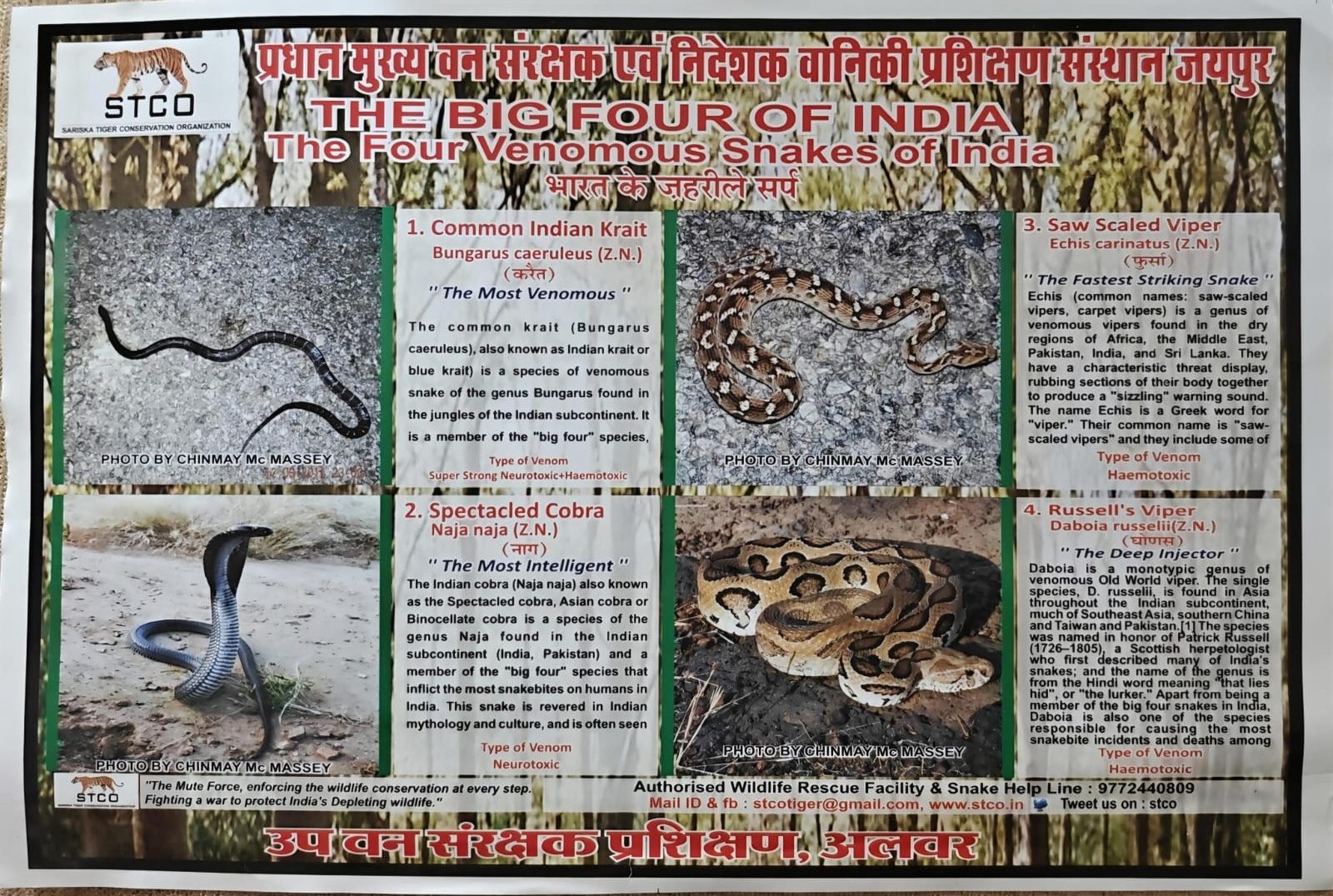
    • Cobra lifts vertically the front part of the body (1/3rd), opens its hood and makes hiss and rushes for the aim.
    • Vipers most often may not rest in an ‘S’ form, bend the front part of their body in a Zigzag manner, and make a kind of strong sound, but not as strong as Cobra.
  • If you meet a snake, back slowly, don’t make any sudden or jerky movement, and do not turn your back to the snake and always give the possibility for the snake to go away.

Myths about Snakes: Myths and facts about snakes & lizards

  1. With snakes carry diamond/precious stones on their head.
    • Fact: The large scales on the head of many snakes (called shields) reflect sunlight and may appear as diamond.
  2. Myth: Snakes drink milk.
    • Fact: Snakes drink water but do not drink any other kind of liquid, they cannot digest it properly.
  3. Myth: Snakes remember you if you hurt them.
    • Fact: Snakes do not have any feeling of vengeance nor any necessary intelligence to remember people or place for taking revenge.
  4. Fact: Not all snakes are venomous.
  5. Fact: Snake babies are cream/yellow in appearance.

Embark on the ultimate safari Adventure - Reserve Now and make memories